A new pathway for developing British racehorses

I recently read an article about changes to the Junior National Hunt Hurdles programme being brought in by the British Horseracing Authority (BHA). This blog is not about the merits or otherwise of this approach, but rather about an idea that occurred to me after reading a quote from Tom Byrne, the BHA Head of Racing and Betting. He stated that the aims of the programme were

“ensuring that developmental pathways exist so that we are nurturing future talent and, over the longer-term, making sure we are competitive at the top level.”

The words that stood out were ‘pathways’ and ‘nurturing future talent’. This got me thinking, what would happen if you developed horses in the same way as elite programmes in sports such as cycling?

Their pathway nurtures talent at a regional level before developing it through national programmes at age (ability) appropriate levels. After this, the athletes are ready to enter the full competitive environment such as an Olympic Games.

The Racing Pathway

So how would this work in racing? Here’s one idea.

It would start with a series of regional qualifiers to identify the best young horses. Those horses that win or are placed in races will qualify for the nationals in the second half of the season. This would be a series of races that bring together the best young stars in a series of races.

A key stipulation for taking part in this pathway would be that horses that race in national events are required to stay in that pathway for a season (or two). The aim here is to avoid the situation of early-developers taking the spoils on route to a fast-tracked career. In return patient owners would be rewarded with decent prize money in national pathway races.

Other stipulations could be added about country of birth, training establishment, or pedigree if you wanted to promote homebred talent.

The outcome

In a best case scenario I would suggest:

  • For the horse: a steady development competing against similarly matches peers as it improves
  • For the owner: decent prize money that rewards a patient developmental approach
  • For the punter: competitive betting races
  • For the spectator: the chance to watch a horse develop and enjoy head-to-head rivalries as horses race against in even more important races

This would be an experiment to see if a deliberate pathway that slowly develops horses through a season or two can produce a future champion, a soundly built consistent high-performer, or maybe even a stallion of the future.

How this is different from the existing process is that it gradually develops a young horse along recognised stages of development, rather than missing out a few stages to chase prestigious prizes.

It would be a more patient approach compared to initiatives such as the High Value Developmental Races that support British commercial breeding by providing more money for early career races without any thought about the rest of a career.

Horses are idiosyncratic animals and there is no one rule that works for all. This is not some grand solution to a problem, but rather a novel way of supporting a horse’s development. Perhaps the BHA needs some fresh thinking if it is to address the decline of the British bred thoroughbred
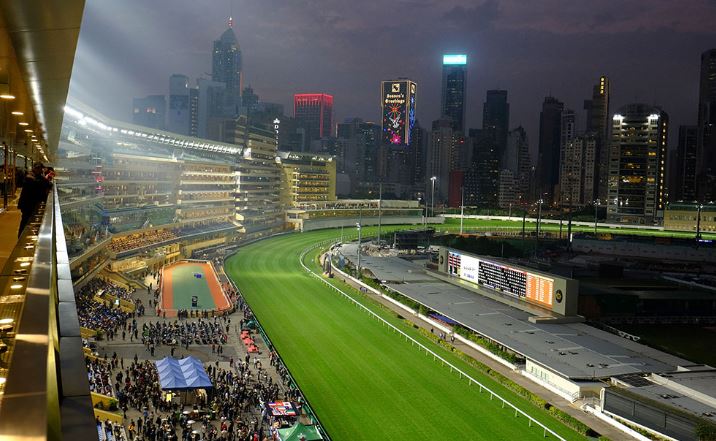
Racing in Hong Kong could be worth three times the value to an owner

This week it was reported that Thesis, the horse who won the 2022 Britannia Stakes at Royal Ascot, had been sold to race in Hong Kong.

The horse’s trainer Harry Charlton admitted that the ‘spending power is hard to contend with’ when a bid comes in from Hong Kong. Looking through the data it is probably fair to say that this will be money well spent.

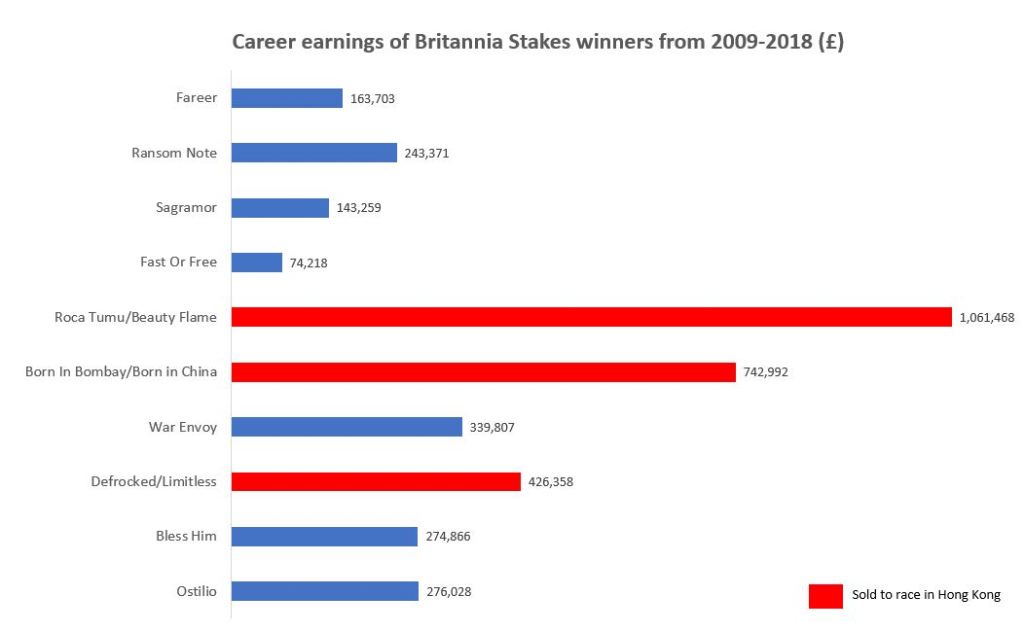
Thesis will be the fourth Britannia winner since 2013 to move to Hong Kong and the stats suggest he will likely earn his new owners three times as much as he could do in Europe. The graph below shows the career earnings of winners between 2009 and 2018 – ten years in which three horses were sold to Hong Kong.

The three biggest careers earners were the three horses who moved abroad, averaging £743,606 in earnings compared to the £216,465 for those who stayed at home (although Bless Him is still going strong and adding to his winnings).

The stand out performer is Britannia winner Roca Tumu who raced as Beauty Flame in Hong Kong and won over a million pounds in win and place prize money.

Even the least successful of the three Hong Kong horses, Limitless, still earned £426,000 despite only two wins in Hong Kong.

Source: Racing Post – note: dual named horses represent UK and Hong Kong racing names

It is highly unlikely that these three horses we significantly better than the other seven winners, so if ever you wanted a simple example of the differential in prize money in the UK compared to other jurisdictions then this could be it.

Specialisation and Olympic medals

When a country finishes on top of the Winter Olympic medal table you immediately think it must be the best nation for winter sports. But a more detailed look at the medal table from Beijing 2022 shows a story of specialisation, with big gains to be made by specialising in sports that offer lots of medals.

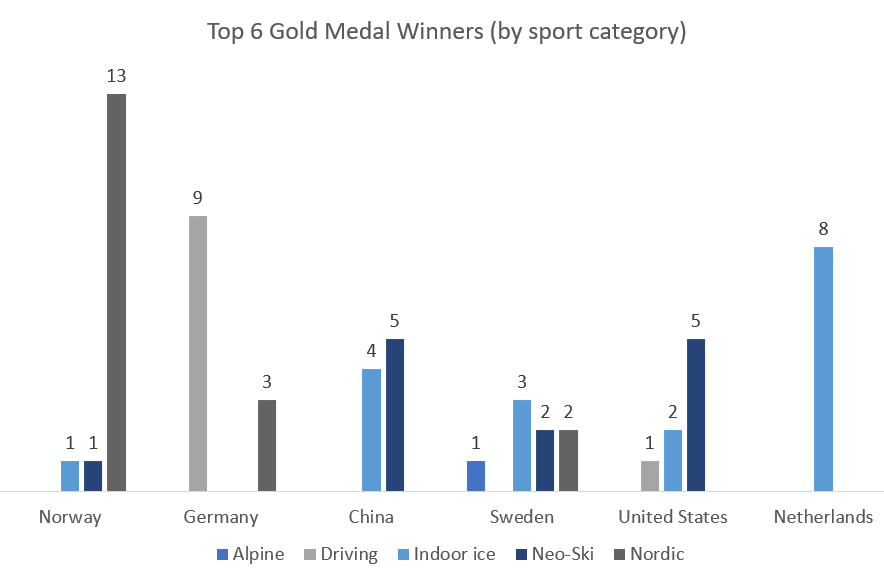
The graph below shows the top six countries for gold medals overall, with gold medals broken down by category of sport. In this case I’ve broken them down into alpine (downhill skiing, slalom etc), driving (bobsleigh, luge etc), indoor ice (skating, curling and hockey), neo-ski (freestyle skiing, snowcross etc), and nordic (cross-country, biathlon, ski jumping).

Just from a glance it is easy to see how each country in the top six, with the exception of Sweden, won the majority of medals in one to two categories. The most obvious is the Netherlands who won all their medals in speed-skating, while Norway who finished top of the overall table won 13 of their 15 gold medals in nordic sports.

Also, where would Germany be without bobsleigh, luge and skeleton? They won 9 of the 10 gold medals available and these account for three-quarters of all their gold medals.

The biggest winners from the shift to new sports such as Aerials, Halfpipe, Snowboard Cross, and Big Air are the US and China – both of whom got between 55%-65% of their gold medals from this category. However, this neo-ski has also opened up new opportunities for countries such as New Zealand and Australia to start claiming gold medals (New Zealand got two and Australia one).

The opposite of this trend is in the alpine category, where every gold medal was won by a European. It remains to be see how much longer these events will be considered the Blue Riband of winter sports.

The advent of newer sports in skiing and on ice has increased the range of the Winter Olympics beyond traditional heartlands in Europe and North America. This can only be good for the Games, as a more diverse sporting population (who are genuinely competitive) can only serve to push these sports forwards to faster, higher, stronger things.

The winners and losers of the NHL’s decision to withdraw from the Olympics

Late in December the NHL decided to withdraw from sending players to the 2022 Winter Olympics. It was a decision that disappointed those wanting to promote the sport in Asia, as well as many fans hoping to see the best compete for their National teams at the Olympics. But what will be the likely impact on the ice?

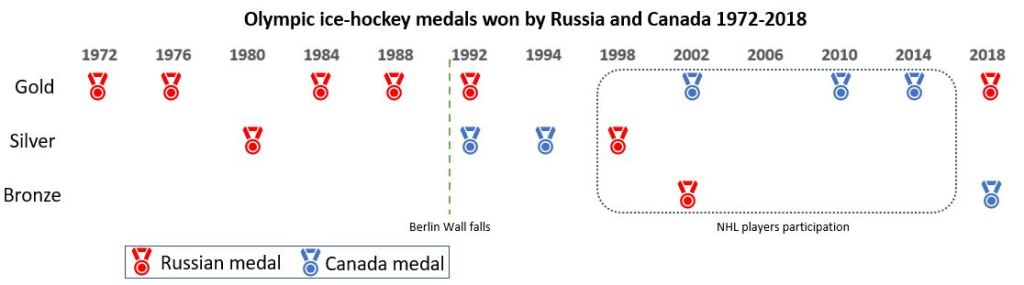
Looking to answer this question I went back through the results from 1972 and found three eras to consider: the Soviet dominance before the fall of the Berlin Wall, tournaments with NHL players present (1998 to 2014) and those without NHL players (1992, 1994, and 2018).

The two teams most affected by the NHL involvement are Russia (also known through the years as USSR/EUN/OAR) and Canada.

  • While Russia totally dominated the Soviet era, winning four golds and a silver between 1972 and 1988, the fall of the Berlin wall was the start of a decline made worse when HNL players came onboard – in the five tournaments with NHL players, Russia failed to win a gold medal with only a silver and bronze for their efforts (although they returned to gold when the NHL sat out 2018).
  • Canada only emerged on the modern hockey medal table after the fall of the Berlin Wall, winning two silver medals, but the real change happened when NHL players got involved – in those five tournaments Canda won three gold medals.

The diagram below shows how success ebbed and flowed for Russia and Canada over the years.

All this raises the question of how will the late decision by the NHL affect this year’s tournament?

Given that Russia and Canada have won 70% of gold medals since 1972 this probably tilts the balance towards Russia winning again. Of the others, Sweden would say they have won gold in both the NHL and non-NHL era so they will still be up for the challenge whatever happens. Similarly, while Finland have never won gold, they have medalled in five of the last nine tournaments, so they can perform regardless of what else is going on.

Finally, the decision by the NHL may open the door for another shock like Germany winning silver in 2018. Hockey may struggle to make an impact in Asia without the NHL, but Germany showed that the success of a smaller team can also be valuable to generate momentum for the sport in that country. Perhaps growing the sport in a country where there is already a small and committed fanbase might be more valuable than trying to chase more revenues in Asia.

A year in sport – 2021

At the end of each year I like to look back at what I’ve written over the last twelve months and see what I’ve learnt. So, my own personal review of the year shows that:

Football

  • Covid has helped to shift attention from the Premier League’s continued dependence on gambling, where nearly half of all teams are sponsored by gambling firms.
  • The teams behind the short-lived European super league had research that showed three-quarters of fans were more interested in star players, big teams, and occasions, with the largest of any group ‘FOMO Followers’ preferring ‘European football over domestic for the perceived higher quality of entertainment that it offers.’ But they failed to realise that it is the passion of the 25% of ‘Fanatics’ or ‘Club Loyalists’ that makes everyone else want to watch. It was this passion that everyone rallied around to stop the super league.
  • In April, responses to the European super league made it look like 2021 was going to be the year of a new football fan activist, but that never materialised and it seems like nothing has changed (unless the government review of football governance and some teeth).
  • Harry Kane is finishing the year with a goal a game in his last three outings, so Spurs probably made the right decision not to sell – especially as previous experience has shown they didn’t do much with the £100m they got for Gareth Bale.

Horse racing

Other sports

And finally,

My own personal favourite of the year was my review of the final of the Copa Libertadores back in January – although there were officially 8 minutes of extra time, the match lasted an additional 14 minutes, but the ball was only in play for 2 minutes 42 seconds!

With a name like Champ you know it is going to be an interesting career

There are two types of champions in this world, those who make it look easy to reach the top and those who struggle against themselves, circumstance, or talent. It is the latter who are typically lauded as the ‘people’s champion’ as most people can see a part of themselves in that struggle.

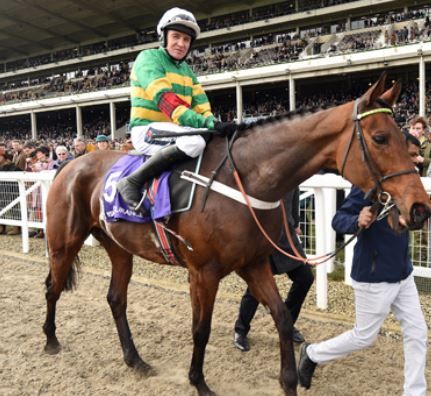
The racehorse Champ fits into this latter type. As his trainer Nicky Henderson said, you don’t give a horse a name like Champ unless you believe he has the potential to live up to the name.

But living up to that name has not come easy to Champ, best evidenced by his incredible performance at the Cheltenham festival in 2020. The champ was metaphorically against the ropes, almost falling at the second last fence and over eight lengths down jumping the last he somehow battled back to deliver a knock-out punch right on the line to win the race.

After winning such an important race for first season chasers it seemed like the world was at his feet. But life is never easy for some champions and the next few races saw the words ‘not fluent’ used to describe poor performances that included pulling up in the Cheltenham Gold Cup.

Back problems have since been identified as the reason for a few lacklustre runs, so last Saturday he was entered in a hurdle race to get his confidence back by jumping smaller obstacles. Of course, it wouldn’t be Champ unless he went on to storm to victory in a top class hurdle race that was only supposed to be a confidence booster.

Now the question is where does he run next? Suddenly he is favourite for the staying hurdle race at Cheltenham and can become the new champ of the long-distance hurdling division. This may suit him better, but you get the feeling this story has more twists to come and given his roller coaster career it may be that immortality still lies in the Blue Riband of racing, the Gold Cup.

Maybe he can’t jump as well as other contenders for the Gold Cup, either due to talent or back problems, but this is the adversity that all People’s Champions thrive on and perhaps the raw talent that inspired his name will somehow get him through.

The final decision on where Champ goes will be down to the trainer Nicky Henderson and the owner JP McManus, two people who know what they’re doing and always have the best interests of their horses in mind. If you’re a romantic you’ll be hoping it’s the Gold Cup while the hard nosed professionals will be backing him for the Stayers hurdle. Either way, hopefully he finds himself a champ at the end of the day.

Will Japanese interest in the Prix de l’Arc de Triomphe finally be rewarded?

It is over 6,000 miles from Tokyo to Paris, but that has never stopped the autumnal Japanese pilgrimage to Longchamp, home of the Prix de l’Arc de Triomphe. One of the most important races in Europe has caught the imagination of the Japanese racing public and owners, driven both by potential financial gain and the sheer excitement of cheering home a local hero on foreign soil.

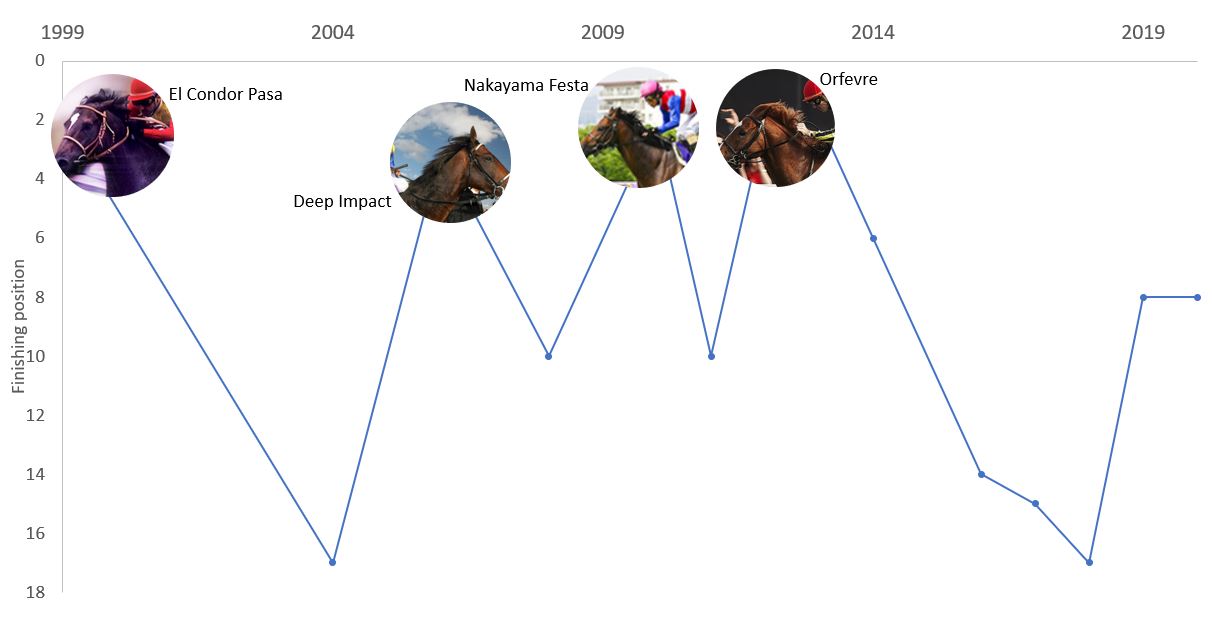
Since 1999 Japan has sent 22 horses to Paris without a win, although some have come close. Agonisingly so for the punter beside me in 2012 when Orfreve somehow managed to lose after storming into a race winning position: a result that Orfreve’s Jockey that day Christophe Soumillon told the Racing Post years later ‘I still have trouble understanding why it didn’t happen.’

Japan has entered the race fourteen times since 1999, usually with one horse but on six occasions there have been more than one (although the number of runners has no relationship to performance).

The graph below shows the best result in each year when Japan had a runner, highlighting the four stars to who have come the closest.

The best finishing position of a Japanese horse in the Prix de l’Arc de Triomphe

The decade from 2004 to 2013 were the best of times, or worst of times if you hate to come so close and not win. Deep Impact, Nakayama Festa and Orfevre finished second or third four times in this period.

Since then the number of runners have increased but the results have got worse, with a sixth place for Harp Star in 2014 the start of a period that has seen the average best placing decline to almost 12th. Not much return for those 6,000 miles.

So what odds a change of fortune for Japan in 2021? Well the bookmakers have Chrono Genesis at around 10/1 and Deep Bond at around 20/1. So probably not. Although with Chrono Genesis being talked about in the same breath as Nakayama Festa and Orfevre, perhaps the good times might be returning – I’d be willing to take at least each way on that.

The Gigginstown dispersal sale is no place to look for return on investment

The annual Goff’s horses in training sale takes place in Doncaster on St Leger week and once again there will be an interesting side show as Gigginstown Stud continue the dispersal of some stars of the turf. But looking at previous sales results it would make you wonder what all the fuss is about.

It was in 2019 that Eddie and Michael O’Leary announced that there were winding down their racing operation and since then they have been selling off their Gigginstown horses in bundles at the annual sales. While there has always been some selling as part of their racing operation, this has been ramping after the 2019 announcement with more horses up for sale this year than ever before.

The Gigginstown dispersal always gets a lot of attention as many of the horses are well known, and the price tag usually matches their fame. But examining the race record of these horses after the sales shows that reputation may be driving price, rather than potential.

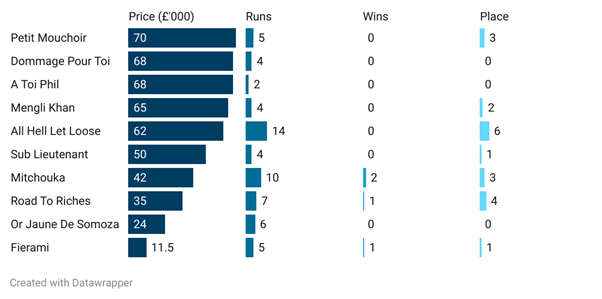
Picking up ten of the top sellers from the last couple of years would have cost nearly half a million pounds and produced only four wins from sixty-one runs (a win to run percentage of 7%). Only three of the horses have won a race, while another three have not even managed to finish in the top three on any occasion.

Table: Top Gigginstown horses sold at auction and their subsequent racing record

Data for sales from 2018-2020 and only covers horses who raced again after sales.

Taking a different route

Picking up an ex-Gigginstown horse at the sales may get you close to a bit of stardom, but it is unlikely to bring you much success on the track. Of course, owning a horse can bring enjoyment beyond the win/run percentage but to have only three winning horses out of ten seems like a disappointment for the money paid out.

The one exception may be to drop down in class to Hunter Chases or Point-to-Points. Road to Riches has managed one win and four places in hunter chases, while All Hell Let Loose has been placed in six Point-to-Points.

New season, same story

When it comes to gambling advertising in the English Premier league there is a lot of noise but not a lot of action.

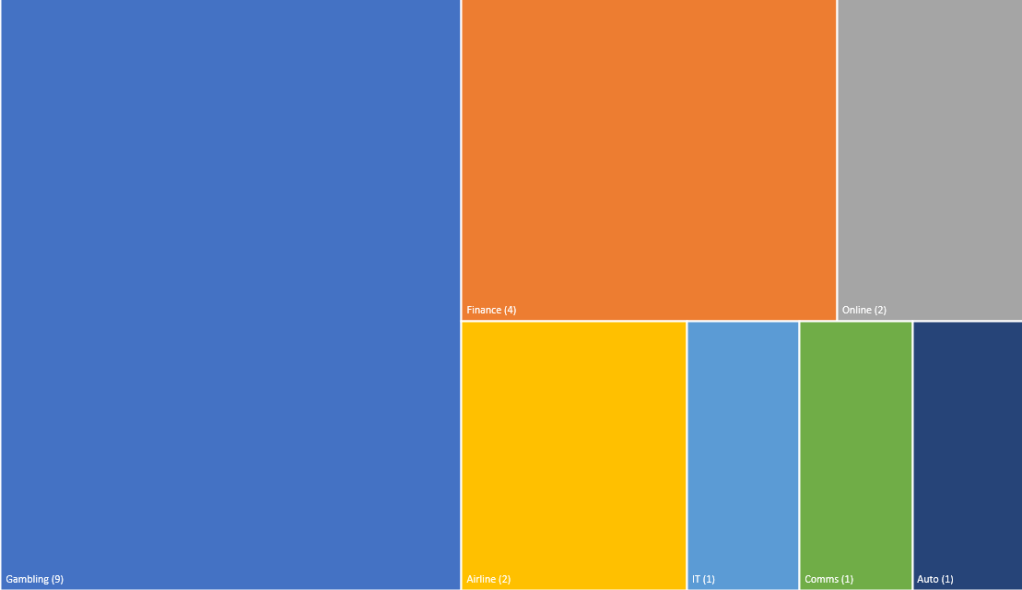
Looking at shirt sponsors for the 2021/22 season shows an increase the number of teams being sponsored by gambling firms (from eight to nine), and gambling sponsorship now accounts for 45% of all teams.

The breakdown of Premier League team sponsors by sector

The increase was caused by two promoted teams having gambling sponsorship, while only one relegated team had a gambling sponsor. It would make you think that if Brentford and Watford can manage to stay up this year, then gambling sponsors will be in the majority at the start of 2022/23.

But not so fast. Another trend among gambling sponsors is that they tend to support clubs lower down the food chain. The average finishing position of gambling sponsored clubs was 12th compared to an average of 5th for teams sponsored by financial firms. So it is likely that some gambling sponsors will end up in the Championship  next year.

While the Premier League continues to talk about ‘responsible partnerships’ and ‘self-regulation’ this trend is unlikely to change. The global exposure of the Premier League makes even a smaller club an ideal opportunity for bookmakers to attract customers. In effect, a football game in England is used by Asian bookmakers to attract Asian customers watching on TV – hence the lucky number 88 appearing in two teams this year.

Whether calls from the House of Lords that gambling operators should no longer be allowed to advertise on the shirts of sports teams or any other part of their kit from 2023 will be listened to remains to be seen.

I wouldn’t bet on it.

How not to replace Harry Kane

If Harry Kane gets his move away from Tottenham this summer, few Spurs fans will getting excited about Plan B – using the £100+ transfer fee to build a better squad. That’s because most will remember what happened when Gareth Bale left in 2012.

Bale went to Real Madrid for £82m and Spurs used the money to go on a spending spree, adding six players to the squad. As the table below shows, the only player who turned out to be any good was Christian Eriksen, and he ended up leaving on a free transfer in January 2020.

Of the other five players, only Erik Lamela is still at Spurs, while the rest were moved on at an aggregate loss of £8m. You could argue this is only natural as players get older and their value goes down, but these players’ average age was 22 when Spurs bought them.

Players bought by Spurs in 2012 and what happened next

 Bought(£m)Sold (£m)
Erik Lamela30Still at Spurs
Christian Eriksen11Free
Nacer Chadli713
Paulinho179.8
Etienne Capoue96
Vlad Chiriches84.5
TOTAL8233.3

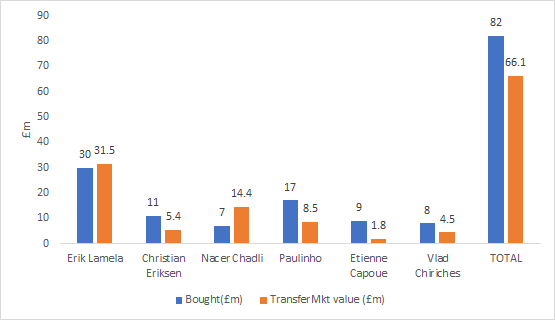
Another way to look at these deals is to consider Tranfer Markt’s current valuations. This shows that these players who were valued at £82m in 2012 are now worth £66m in 2021, a figure made even worse when you consider the hyper-inflation of the transfer market.

Players bought by Spurs in 2012 and TransferMkt value in 2021

Whether Gareth Bale could have carried Spurs over the line to a trophy victory will never be known, but the lack of trophies from the original Plan B must surely worry fans.

Perhaps there is a Plan C that is worth a go. Spurs should try to replace Harry Kane with an equally expensive, and proven, marque player rather than spend £100m and hoping for the best.  

Design a site like this with WordPress.com
Get started